Helfen Staatsausgaben der Wirtschaft?
From the multiplier to the ZLB — how a simple question became the hardest problem in macro
The multiplier promise
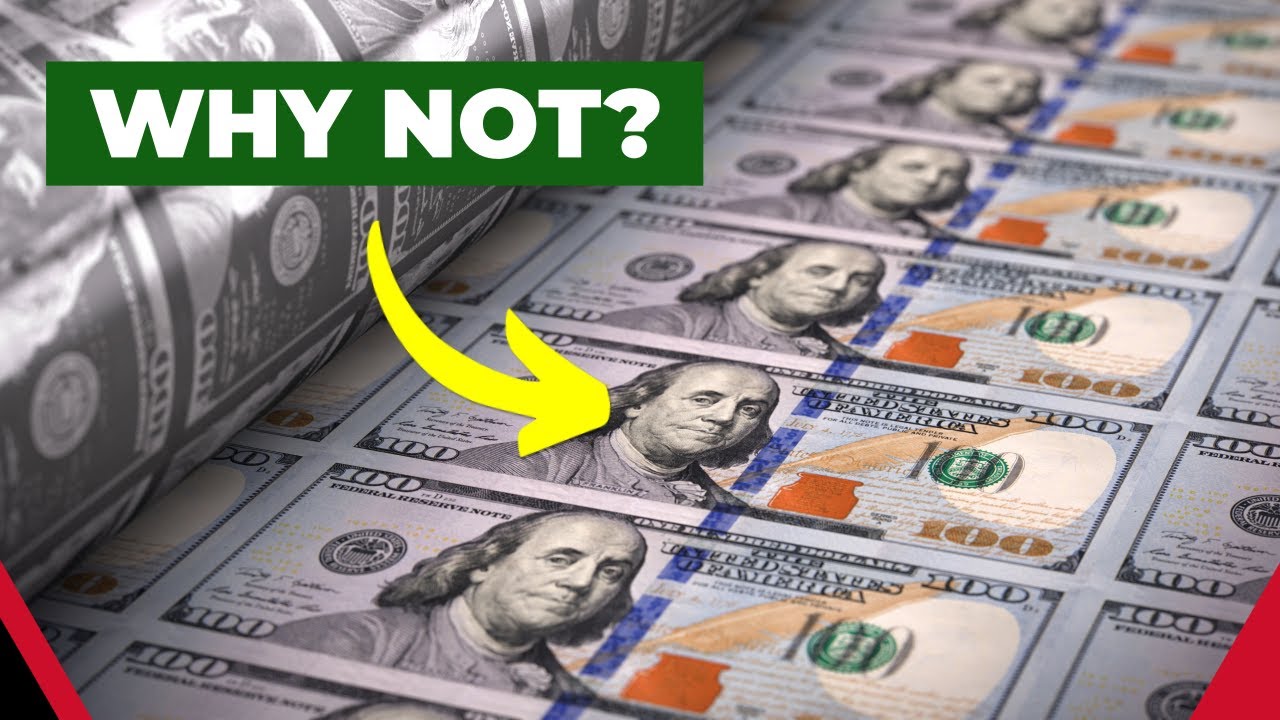
This video has over 4 million views. It says the government can never run out of money. Is it right?
To evaluate that claim, you need one concept: the multiplier. Start with how economists measure everything the economy produces.
$Y$ is GDP. $C$ is consumption, $I$ is investment, $G$ is government spending, $NX$ is net exports. This is an accounting identity — true by definition. Notice that $G$ appears directly. When the government builds a bridge or hires a teacher, that spending is GDP the moment the check clears.
But the real argument is bigger: a dollar of $G$ creates more than a dollar of $Y$. That's the multiplier. The engine is simple: when people earn income, they spend a fraction of it — the marginal propensity to consume (MPC). If your MPC is 0.8, you spend 80 cents of every new dollar.
The government pays a construction crew \$1 million. They spend \$800,000. Those recipients spend \$640,000. Then \$512,000. Each round is smaller, but they add up.
The total effect is a geometric series:
$$\text{Multiplier} = \frac{1}{1 - MPC}$$If $MPC = 0.8$, the multiplier is $1/(1-0.8) = 5$. Every dollar creates five dollars of activity. A \$100 billion bill generates \$500 billion of GDP.
Each dollar the government spends triggers a chain reaction: the recipients spend most of it, those recipients spend most of that, and so on. The total effect is several times the original dollar. With typical spending habits, the naive formula says each dollar creates five dollars of activity.
Is this too good to be true? Yes. The model ignores a critical force: crowding out. That \$100 billion has to be financed. If the government borrows it, it competes with private borrowers for the same pool of savings, pushing interest rates up. Higher rates mean less private investment. The multiplier shrinks.
"A government that issues its own currency can never run out of money the way a business or household can."
-- Stephanie Kelton, The Deficit Myth, 2020
"Why can't we just print more money?"
A viral explainer says governments with their own currency can never run out of money. The multiplier you just learned is the first tool to evaluate this claim — but the answer requires understanding what happens when money creation meets real resource constraints.
The multiplier debate
"The stimulus should have been at least \$1.2 trillion. The plan was nowhere near big enough to fill a gap of around \$2 trillion a year between what the economy could produce and what it was actually producing."
— Paul Krugman, New York Times, January 2009
Krugman's argument relies on a multiplier of roughly 1.5 and an output gap of about \$2 trillion. At that multiplier, you need \$1.3 trillion of spending to close the gap. The final bill was \$787 billion — barely half. This is the pro-multiplier position in its strongest empirical form: not that the multiplier is 5, but that even a modest multiplier of 1.5 means the 2009 stimulus was undersized.
"Government spending does not create wealth. Every dollar the government borrows is a dollar taken from private investment. The idea that borrowing from future generations to pay people to dig ditches and fill them in makes us richer is Keynesian nonsense that was proved wrong thirty years ago."
— John Cochrane, The Grumpy Economist, January 2009
Cochrane is making the crowding-out argument at maximum strength. In his framework, government borrowing doesn't add to total demand — it redirects it. Every dollar the government spends is a dollar the private sector doesn't. The net effect on GDP is zero or negative because government allocates resources less efficiently than markets. This is too strong — it assumes perfect crowding out, which requires the economy to be at full employment — but the core insight that borrowing has costs is correct.
Where this leaves us
The multiplier exists, but it is smaller than the naive $1/(1 - MPC)$ formula suggests. Crowding out is real: government borrowing competes with private investment and pushes interest rates up. The viral video oversimplifies — but the critics who say government spending does nothing are also wrong. The honest range for normal-times multipliers is 0.6–1.0. Not magic, but not zero.
But all of this assumes consumers are mechanical: get a dollar, spend 80 cents, no questions asked. What if they're smarter than that? What if they look at the government borrowing \$100 billion and think, "Someone's going to have to pay for this — and that someone is me"?
The rational consumer problem
"The national debt is \$33 trillion. Your share is \$99,000. Every child born today inherits this burden. This is fiscal child abuse."
— Sen. Rand Paul, October 2023
Shared tens of thousands of times. The framing assumes a model of government debt that most economists reject — but it captures a real intuition about who pays for deficits.
Senator Paul's rhetoric assumes taxpayers will pay back every dollar of debt. In 1974, Robert Barro asked: what if taxpayers already know that?
Intertemporal choice. The Stage 1 consumer lives in the present — earn a dollar, spend MPC of it, done. But real people plan across time. You don't decide how much to spend by looking only at this month's paycheck. You think about next year's tuition, whether you'll have a job in five years, and what taxes might look like in retirement. Economists call this intertemporal optimization: choosing a spending plan across your entire lifetime.
This changes everything. A temporary tax cut puts money in your pocket today, but a lifetime optimizer knows future taxes will rise to repay the borrowing. Your lifetime income hasn't changed — just the timing.
Ricardian equivalence. Barro's formal version of the argument is clean and devastating:
- The government cuts taxes today, financing the cut by borrowing.
- The debt must be repaid, so future taxes rise by exactly today's cut plus interest.
- A forward-looking consumer recognizes this. The tax cut doesn't make them richer — it rearranges timing.
- So they save the entire tax cut to cover the future tax bill. Consumption doesn't change. The multiplier is zero.
The consumer's intertemporal budget constraint is unchanged by the timing of taxes. Government bonds aren't net wealth — they're IOUs that taxpayers write to themselves. The present value of lifetime taxes is the same whether the government collects them now or borrows and collects later.
Think of it this way: if your employer offered you your whole salary upfront on January 1, you wouldn't spend it all in January. You know you need it for the rest of the year. Rational consumers treat government stimulus the same way — it's not a gift, it's an advance on future taxes.
If Ricardian equivalence holds, fiscal policy is completely impotent. Tax cuts, stimulus checks, government borrowing — none of it changes spending. This isn't a minor tweak. It's a theoretical atom bomb aimed at the entire Keynesian project.
But it requires heroic assumptions. Consumers must have infinite planning horizons (caring about grandchildren's taxes). They must face perfect capital markets (borrowing freely at the government rate). They must understand government budget constraints. In reality, none of this holds.
Campbell and Mankiw (1989) estimated that roughly 50% of consumers are "hand-to-mouth" — they spend what they get, regardless of future tax implications. Not because they're irrational, but because they're credit-constrained. They can't borrow against future income, so a dollar today is worth far more than the abstract promise of consumption smoothing.
"The national debt is \$33 trillion. Your share is \$99,000. Every child born today inherits this burden. This is fiscal child abuse."
— Sen. Rand Paul, October 2023
"Was the 2009 stimulus too small?"
Christina Romer told Obama it needed to be \$1.2 trillion. Congress passed \$787 billion. The sluggish recovery that followed became the central exhibit in the biggest fiscal policy debate of the century.
Do rational consumers defeat fiscal policy?
"Are government bonds net wealth? No. The current generation's bonds are the next generation's tax liability. Consumers who understand this will save more when the government borrows, fully offsetting the fiscal stimulus."
— Robert Barro, Journal of Political Economy, 1974
This is the original Ricardian equivalence paper. Barro's logic is airtight given his assumptions: infinite horizons, perfect capital markets, lump-sum taxes. The result was a watershed moment — it forced every subsequent paper on fiscal policy to specify exactly which assumption it was violating and why that violation mattered. The theorem's power is not that it's true, but that it defines what you must prove wrong.
"About half of consumption is accounted for by 'rule of thumb' consumers who simply spend their current income. Ricardian equivalence fails not because consumers are irrational, but because they are constrained."
— John Campbell & N. Gregory Mankiw, NBER Macroeconomics Annual, 1989
Campbell and Mankiw didn't attack rationality — they attacked the assumption that everyone can borrow freely. Roughly half the population is liquidity-constrained: they'd like to smooth consumption across time but can't access credit. For these consumers, a stimulus check isn't an intertemporal rearrangement — it's cash they literally couldn't get otherwise. The MPC for hand-to-mouth households is close to 1.0. This single empirical finding rescued the fiscal multiplier from Ricardian oblivion.
Where this leaves us
Pure Ricardian equivalence is wrong as a description of reality. But it taught us the most important lesson in fiscal policy: the multiplier depends on who gets the money. Stimulus checks to low-income, credit-constrained households have large multipliers. Broad tax cuts benefiting wealthy savers have small ones. This isn't ideology — it's the direct, inescapable implication of consumption theory. The modern framework (TANK and HANK models) builds heterogeneity in from the start.
So the multiplier isn't zero, but it's not as large as Stage 1 promised. Is fiscal policy even useful? The answer depends on something we haven't considered yet: what the central bank is doing. And there's one specific condition where fiscal policy becomes the only tool that works.
The ZLB exception
"The Committee decided today to establish a target range for the federal funds rate of 0 to 1/4 percent."
— Federal Open Market Committee, December 16, 2008
Fourteen words that announced the most powerful central bank on Earth had run out of ammunition. Lehman had collapsed three months earlier. Credit markets were frozen. Unemployment was surging. And the Fed had just fired its last conventional bullet.
Monetary offset. To understand why those fourteen words matter so much, you need to understand what normally happens when the government increases spending. In ordinary times, the central bank is watching. If government spending pushes demand above capacity — threatening inflation — the central bank raises interest rates to cool things down. If the economy is weak, the central bank cuts rates, potentially making fiscal stimulus unnecessary.
This is monetary offset: the central bank can partially or fully neutralize fiscal policy. In normal times, the Fed — not Congress — controls aggregate demand. This is why many economists are skeptical of fiscal stimulus in ordinary conditions: even if the multiplier is positive, the central bank will offset it to maintain its inflation target.
The ZLB trap. But interest rates can't go below zero (or not much below). When the economy is in severe recession and rates are already at zero, the central bank is stuck. It wants to stimulate but has no room to cut. The usual argument against fiscal policy — "the Fed will offset it" — evaporates. The Fed can't offset because it's at its limit.
At the ZLB, two forces that normally shrink the multiplier are disabled simultaneously:
- No crowding out. Government borrowing doesn't raise rates — they're pinned at zero. Private investment isn't displaced.
- No monetary offset. The central bank won't fight the expansion — it wants more stimulus. Fiscal and monetary policy push in the same direction.
Standard estimates put the ZLB fiscal multiplier at 1.5–2.0 or higher (Christiano, Eichenbaum, and Rebelo, 2011), compared to normal-times estimates of 0.6–1.0.
Think of it as a traffic analogy. Normally, fiscal policy is like adding cars to a highway while the central bank controls the speed limit. If you add cars, the bank slows traffic to prevent crashes — the net effect is small. But at the ZLB, the speed limit is already as low as it can go. Adding cars (spending) now actually increases total traffic flow because the brake isn't working. The two objections to stimulus — crowding out and monetary offset — both disappear.
This is the strongest theoretical case for fiscal stimulus: not as a general policy for all seasons, but as a crisis tool deployed when monetary policy is exhausted.
"The Committee decided today to establish a target range for the federal funds rate of 0 to 1/4 percent."
— FOMC, December 16, 2008
"Is the Fed actually in control?"
The central bank is supposed to steer the economy. But when rates hit zero, the steering wheel disconnects. The 2008 crisis revealed a fundamental limit of monetary policy that reshaped the entire field.
Does the ZLB really change everything?
"When the zero bound binds, the government spending multiplier can be 1.5 or above, and the welfare multiplier can be even larger. The key mechanism is the elimination of monetary offset."
— Lawrence Christiano, Martin Eichenbaum & Charles Rebelo, Journal of Political Economy, 2011
This is the canonical theoretical result. Christiano, Eichenbaum, and Rebelo showed that in a calibrated New Keynesian model, the fiscal multiplier at the ZLB is roughly 1.5–2.0 — far larger than normal-times estimates. The mechanism is precisely the one we described: no crowding out and no monetary offset. Valerie Ramey's (2019) empirical survey of multiplier estimates across countries and methods finds recession-period multipliers around 1.5, broadly confirming the theory.
"The ZLB is a temporary condition. Building fiscal doctrine around a special case is dangerous. By the time stimulus spending ramps up — infrastructure projects take years — the ZLB episode may be over, but the debt remains."
— Summary of ZLB skeptic position (Taylor, Ramey, and others)
The political economy critique has real force. The ARRA was signed four months after Lehman's collapse. Infrastructure spending took years to ramp up. By the time spending peaked, the ZLB conditions that justified it were starting to ease. Unconventional monetary tools (QE) can be deployed immediately, without a congressional vote. The counter-counter: the 2008–2015 ZLB period lasted seven years — long enough for any infrastructure project to contribute. And the 2020 experience showed fiscal stimulus can be deployed fast when there's political will.
Where this leaves us
The ZLB is where fiscal policy earns its keep. Both theory and evidence agree: when monetary policy is exhausted, fiscal expansion works and the multiplier is large. But this is a conditional endorsement, not a blank check. It justifies having fiscal tools ready for crises and the political will to deploy them at scale — not permanent fiscal expansion. The lesson is precise: fiscal policy is most valuable exactly when it's least controversial, in severe downturns when the economy desperately needs demand and the central bank has nothing left to give.
We've built a conditional answer: fiscal policy works, especially at the ZLB. But a radical minority says we've been asking the wrong question entirely. What if deficits don't need to be "paid for" at all?
Fiscal theory and the open questions
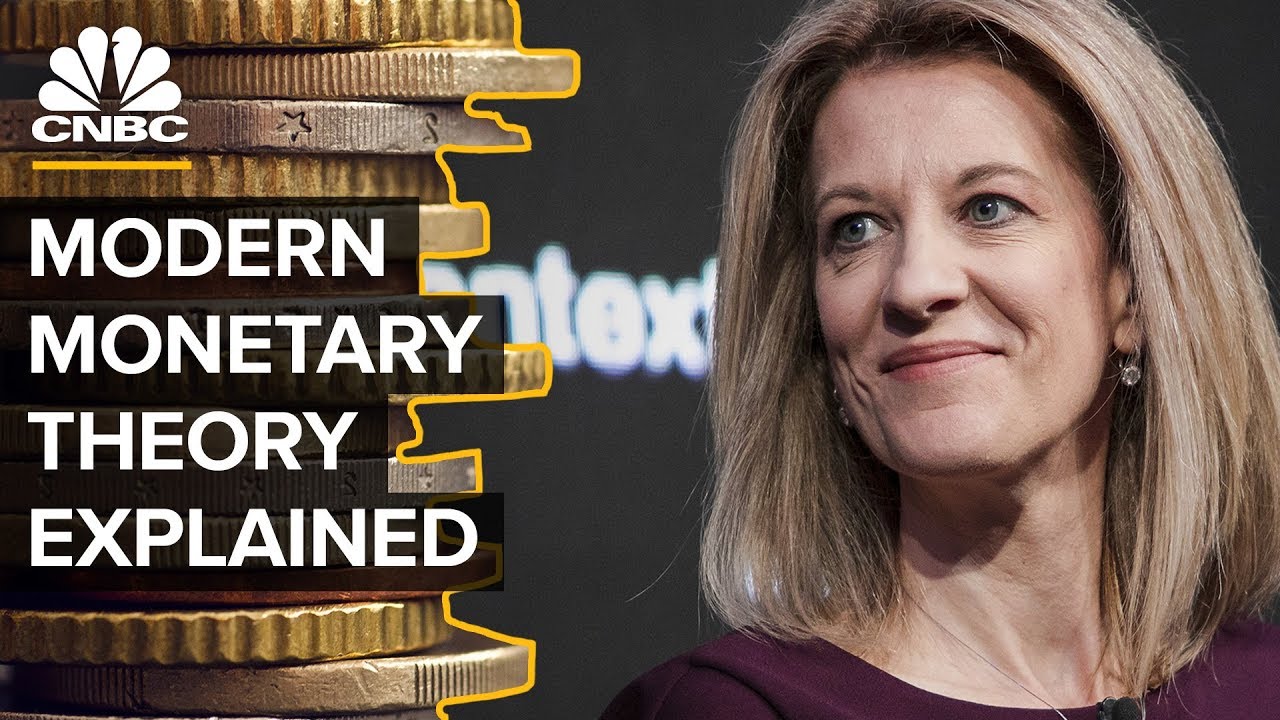
Stephanie Kelton, the most prominent voice for Modern Monetary Theory, tells Stephen Colbert that the deficit is not what we think it is. The audience laughs — and then stops laughing.
Modern Monetary Theory (MMT). The core MMT claim is simple and provocative: a government that issues its own currency can never involuntarily run out of money. The United States prints dollars. It can always make payments in dollars. So "can we afford it?" is the wrong question for a currency-issuing sovereign.
The constraint, says MMT, is inflation, not the deficit. Spend until full employment. If inflation rises, raise taxes to drain spending power. Taxes don't "fund" government spending — they regulate demand. The deficit is an accounting residual with no independent significance.
The Fiscal Theory of the Price Level (FTPL). John Cochrane, Eric Leeper, and Christopher Sims approach from the opposite direction. Their starting point is a specific equation: the real value of government debt must equal the present value of future primary surpluses.
If the government commits to permanent deficits, the math requires the price level $P_t$ to rise to reduce the real value of existing debt. Inflation isn't caused by "too much money" — it's caused by fiscal policy that issues more debt than future surpluses can support.
FTPL says government bonds are like shares in a company. A company's stock price depends on expected future profits. Government bonds' real value depends on expected future surpluses. If the government promises to run deficits forever, the "stock price" of its bonds must fall — meaning the price level must rise. Inflation is how markets call the government's bluff.
How they differ. Both reject simple Ricardian equivalence. Both take fiscal policy seriously. But their conclusions diverge sharply:
- MMT says: Deficits are fine as long as there's no inflation. Spend freely, tax only to cool inflation when it appears.
- FTPL says: Deficits cause inflation — that is how they're paid for. The price level adjusts whether you're watching or not.
One says the constraint is observable (watch for inflation). The other says the constraint is structural (the debt-to-surplus ratio determines the price level regardless).
"Federal deficits, in and of themselves, are not a problem. The problem is inflation, and the solution is to manage spending in relation to the economy's real productive capacity."
-- Stephanie Kelton, The Deficit Myth, 2020
"Is MMT right about deficits?"
Modern Monetary Theory went from academic backwater to bestselling book to congressional talking point in five years. Its central claim — that deficits don't matter the way we think — is either the most important insight in a generation or the most dangerous.
Is there a fiscal limit?
"The federal government can always afford to spend more. The question is never 'how will we pay for it?' The question is 'will it cause inflation?' If there's slack in the economy — unemployed workers, idle factories — deficit spending puts those resources to work without inflation."
— Stephanie Kelton, The Deficit Myth, 2020
Kelton's argument is internally consistent: if the real constraint is inflation, not solvency, then deficit spending when there's economic slack is not just affordable but beneficial. The 2020 stimulus — \$5 trillion over two years, largely monetized — supported this view initially: unemployment fell from 14.7% to 3.5% in 28 months, faster than any recovery in history. But the sequel — 9.1% inflation by mid-2022 — revealed the difficulty of the "just watch for inflation" approach. By the time inflation was visible, overshoot was already locked in.
"Inflation is always and everywhere a fiscal phenomenon. When the government issues debt it cannot repay from future surpluses, the price level must rise to reduce the real value of that debt. Deficits are paid for — through inflation."
— John Cochrane, The Fiscal Theory of the Price Level, 2023
Cochrane's FTPL inverts the standard monetarist narrative: it's not the money supply that drives inflation, it's the government's fiscal commitments. If the government promises more spending than future taxes can cover, the price level adjusts to make the math work. The 2021–2022 inflation episode fits the FTPL story well: massive deficit spending, accommodated by the Fed, followed by exactly the price-level adjustment the theory predicts. The critique: FTPL only generates distinctive predictions under specific policy regimes (active fiscal, passive monetary) that are unusual in developed economies.
Where this leaves us
MMT is right that currency-issuing governments face different constraints than households. FTPL is right that the fiscal-monetary interaction matters more than standard models typically admit. But neither framework replaces the core insights from Stages 1–3. The multiplier exists. It depends on who gets the money. It's largest at the ZLB. These findings are robust across frameworks. What Stage 4 adds is a warning: the conventional wisdom about debt sustainability is less settled than most textbooks admit — and the 2020s may be remembered as the decade that settled the debate, one way or the other.
Where this leaves us
We started with a viral video claiming the government can never run out of money. Eight million people watched it. Four stages later, here's what you now know:
- The multiplier is real but modest (Stage 1). Government spending ripples through the economy, but crowding out — government borrowing competing with private investment — shrinks the effect. Normal-times multipliers are 0.6–1.0, not the 5.0 of the naive textbook formula.
- Who gets the money matters as much as how much (Stage 2). Ricardian equivalence says rational consumers save stimulus rather than spend it. Pure equivalence is wrong, but it revealed the crucial parameter: roughly half the population is credit-constrained and spends what it receives. Target them, and the multiplier holds. Send checks to savers, and it vanishes.
- At the ZLB, fiscal policy earns its keep (Stage 3). When the central bank has cut rates to zero, crowding out disappears and monetary offset is impossible. Multipliers jump to 1.5 or higher. This is the strongest case for fiscal stimulus — conditional, temporary, and deployed only when monetary policy is exhausted.
- The frameworks themselves are contested (Stage 4). MMT says the constraint is inflation, not the deficit. FTPL says deficits cause inflation through price-level adjustment. Both challenge the standard story. Neither has displaced it. The 2020s are the live experiment.
The next time someone tells you "stimulus works" or "deficits are theft from our grandchildren," you have the tools to evaluate both claims. Neither is simply right. Both contain a kernel of truth that depends on conditions the speaker isn't specifying: the state of the economy, who receives the spending, what the central bank is doing, and how the spending is financed. That's not a cop-out. That's what it means to actually understand the question.
The viral video we started with was half right: governments with their own currency do face different constraints than households. But "different constraints" is not "no constraints." The multiplier, Ricardian equivalence, the ZLB, and the fiscal-monetary interaction are the four lenses you need to see the whole picture. Now you have them.